Danmar cranial

cranial reshaping - danmar products, 221 jackson industrial drive, ann arbor, mi 48103 - 800.783.1998

homeRed Wing Helmet

WELCOME to

our Informational web site all about Plagiocephly.
Danmar has made helmets and headgear for over 40 years, so it when we saw the need for Cranial Reshaping Orthoses, we entered this very specialized area.  Using our years of experience we designed and manufacture two types of these reshaping orthoses, and in conjunction with your experienced orthostist, this type of treatment therapy is very effective.

DANMAR PRODUCTS

manufactures two styles of Cranial Reshaping Orthoses. The medical professionals, who see the infant, make the decision as to which choice is most beneficial for the baby. Please contact us to find the Orthotists in your area who are qualified to provide our orthoses.

#1) One style, depending on the measurements and degree of Positional Head Deformity (PHD) involves making a cast of the baby’s head and constructing a orthosis from that cast. This is the Michigan Cranial Reshaping Orthosis.

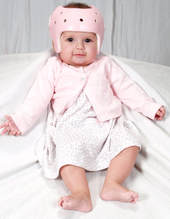
#2) The other style, depending on the measurements and degree of Positional Head Deformity (PHD) has two custom sizes available for immediate fittings by the medical professionals working with the baby. This is the C.A.P. Cranial Reshaping Orthosis

michigan cranial reshaping orthosis


The Michigan Cranial Reshaping Orthosis is an orthotic device used to remodel and shape the skull to prevent or correct Positional Head Deformity (PHD) and to protect the skull. The orthosis is constructed of moldable plastic which is formed to each child’s specific shape and need.

webimage The orthosis is generally worn both day and night for an average period of four to six months.The baby is monitored for any signs of pressure areas and the orthosis will be modified or replaced to accommodate growth as necessary.

Cranial reshaping therapy may require more than one orthosis as the baby grows. The period of time that a specific size orthosis may be used usually depends on when the therapy begins. For example, if therapy is started at 3-months of age, typical orthosis life is 2 months; at 5-months of age, orthosis usefulness is typically 3 months; and at 7-months of age, an orthosis may possibly be used for 4 months. Of course, each baby is different and has its own rate of development.

Precaution: If positional plagiocephaly is associated with torticollis, there may be some additional types of therapy needed as well. If the child is recommended for physical therapy or home neck exercises and stretching programs by your doctor, remove the orthosis during therapy and replace it soon after these exercises.

The Orthotist will supply all the information on breaking in the orthosis (so the baby gets used to it) regular wearing instructions, cleaning of the orthosis and general care.


We are proud to be partnering with Ohio Willowood Laser Scanning and Carving Software Systems.
A digital image is captured of the shape of the infants head using a scanner, then this image is sent to our 3 dimensional carver that creates a duplicate of the shape in foam. This is a time saving step as we can then immediately begin working on the orthosis.


Parent Information

PDF/handout
download


frequently asked questions

Your pediatrician can explain the basics of positional plagiocephaly. The doctor probably will offer referrals to one of the many type of specialists in this field including plastic surgeons or pediatric neurosurgeons.

While this is the recommended therapy from the age of 3 months up to 18 months of age, the best results are achieved when treatment is started at the early end of this range..As the baby’s head grows, the orthosis will be adjusted for proper fit.

There are two options for the initial appointment.  One way that the Orthotist may use is to cover the baby's head with a stockinette type material with sensors in it which allow for a laser scanning of the head.  This scan will show the actual measurements that we need to construct the reshaping orthosis.

The other procedure is usually done by Orthotists in their clinic. After putting a nylon-type stockinette on the baby, a cast will be taken of the baby’s head using plaster bandages, which sets in just a couple of minutes. Standard casting procedures are used and while the baby will not be very happy about having this done, it does not hurt. There is some liquid that drips off during the process but this is just excess water from the plaster. The cast is then removed and the Orthotist marks the cast showing where the eyes, nose, ears and centerline are located.

Because each baby is unique and because so many variables need to be considered, periodic evaluations will be performed at the Orthotist's office. For example, the timeline is dependent on the age of the baby when the treatment starts, and the degree of reshaping that is necessary. Usually, it is just a matter of a few months before the desired results are obtained.

With the many types of insurance available, the best answer we can give is to call your insurance carrier after you have the prescription from your doctor.

treatment of positional head deformity using CAP

Plagiocephaly, or rhomboid-shaped head has recently received increased attention in pediatric neurosurgical and craniofacial surgeons. Such calverial asymmetry is rarely caused by brain malformation or unilateral sutural synostosis, but usually results from late gestational or postnatal deformation. Ever since the recommendation of supine sleeping to reduce the likelihood of SIDS (Sudden Infant Death Syndrome), an increase in positional head deformities has been reported.

When an infant's rapidly growing head is maintained in a nearly fixed position against uterine wall or the mattress, the calverium is progressively flattened. Such deformational plagiocephaly generally will improve within few months after birth, especially if a full range of neck movement can rapidly be achieved. Although undetermined, the incidence of plagiocephaly often quoted is one in every 300 births, and perhaps in 10% of affected infants plagiocephaly may persist as a permanent mild-to-severe deformity.

If the pressure of the rapidly growing brain against a flat surface would flatten the head, then pressure against a concave surface should round it back again. The philosophy behind therapeutic helmet is to achieve the maximum correction during the early growth period. The brain and the skull grow very quickly during first year of life. The growing curve is quite steep in the early months and then starts to level off after six months of age. Eighty-five percent of postnatal skull growth occurs during this first year of life.Therefore, the sooner the mechanical treatment is instituted and the more aggressive it is, the better is the result that can be obtained. Under three months of age, parents are encouraged to actively position their baby, possibly using wedge pillows, and minimizing their time in car seats or other devices that the head rests on.

The CAP was developed as a unique design for a therapeutic headgear for enabling treatment of positional plagiocephaly or positional head deformity. The Danmar Products CAPis intended for prescription use to be used to apply pressure to prominent regions of an infant’s cranium in order to improve cranial symmetry and/or shape in infants from 3 to 14 months of age, with moderate to severe nonsynostotic positional plagiocephaly, including infants with plagiocephalic- and brachycephalic-shaped heads.

Contraindication for this helmet include untreated craniosynostosis, uncontrolled hydrocephalus and unstable cranial skin. If positional plagocephaly  is associated with torticollis, there may be some additional types of therapy needed as well.

The physician always evaluates the infant and makes the determination as to the appropriateness of the  C.A.P. Pediatricians, pediatric neurosurgeons and plastic surgeons are then usually consulted by the families when they first notice the baby’s abnormal head symmetry. Using this transdisciplinary approach, an accurate diagnosis can be reached. Babies from 3 to 14 months of age can usually be successfully treated with this type of therapy.

While the duration of treatment varies by individual, the average baby is in the helmet full time (23 hours a day) for two to four months. Once the ears line up, i.e. cranial base is straight, the orthosis is worn only when sleeping or when the head is resting against a solid object for over 40 minutes, e.g. car seats, prolonged baby carriage rides. Therapy is terminated either when head asymmetry is obtained or when the anterior fontanelle is clinically closed.

In this new therapeutic helmet design, increased importance is emphasized on the biomechanical and ergonomic principles.

The features of the CAP:

  • Light weight, only six ounces
  • Self-adjustable to accommodate the rapid growth of the skull.
  • Easy application and removal.
  • Cost effective
  • Greatly reduced fabrication and fitting time, as it is pre-formed

CAP orthosis  SIZING

There are 2 standard sizes of helmets that can be provided to fit the child precisely:

  • Small 40 cm to 44.5 cm circumference
  • Large 45 cm up to 50 cm circumference

To decide which helmet is appropriate, the clients head circumference is measured with a tape measure. This measurement is taken at eyebrow level.

The helmet with the minimum circumference that will fit the child is then selected. This will allow the maximum room for growth, so that there is a possibility that a second fitting may not be necessary.
For example, if the child's head circumference is measured at 43 cm., the 42 cm to 46 cm. Size B is selected. It is then fitted to the child's head at 43 cm. This allows the child 3 more centimeters of potential head growth without the need to replace the helmet.

CAP adjustments

The child’s head will continue to increase in size normally as he/she gets older. The CAP can be adjusted to comfortably adapt to this growth.

If the reshaping orthosis leaves depressions or red areas on the forehead or scalp, or if the headgeart becomes uncomfortable because of tightness, it may be time to expand it to a larger size.

The fixation (adjustment) side screws (as shown in Figure A) are loosened with a screwdriver so that the two halves of the helmet can be moved apart. The helmet should then be placed on the child’s head and the two halves of the helmet are gently pushed together. They should be moved together until they make gentle but solid contact with the skull. Both side screws are then retightened snugly so that the two halves of the helmet are fixed together.

Foam pads can be loosely placed on the inside of the helmet, if the helmet tips or rocks on the head.These pads loosely fill the space where the helmet does not make contact with the skull. Do not overly fill this area between the helmet and skull.

frequently asked questions

Your pediatrician can explain the basics of positional plagiocephaly. The doctor probably will offer referrals to one of the many type of specialists in this field including plastic surgeons or pediatric neurosurgeons. 
        There are many resources available for further research. At our website, http://www.danmarproducts.com, under Cranial Shaping there are links to informational sites There are web sites which have links to Preferred Physicians Listing, Specialists in this field, Parents Support Groups, and recent articles from various publications.

While this is the recommended therapy from the age of three months up to fourteen months of age, the best results are achieved when treatment is started early. As a child gets older, the skull becomes thicker and the molding becomes more difficult.

A circumference measurement will be taken of the baby’s head and the clinician will adjust the sizing of the helmet, then secure it by means of the side fasteners. In the event that a custom helmet is needed, a stockinette will be put on the baby’s head and a cast will be taken using plaster bandages, which set in just a couple of minutes. Standard casting procedures are used, and while the baby will not be very happy about having this done, it does not hurt. There is some water that drips off during the process but this is not harmful. Then the cast is removed and the orthotist marks the cast showing where the eyes, nose, ears and centerline are located. At the next appointment, a custom lightweight plastic helmet with an inner soft foam layer will be fitted to the baby’s head.

There are many variables, as each baby is unique and is evaluated periodically during the appointments at the orthotists office. For example, the timeline is dependent on the age of the baby when the treatment starts, and the degree of reshaping that is necessary. Usually, it is just a matter of months before the desired results are obtained.

With so many types of insurance available, the best answer we can give is to call your insurance carrier after you have the prescription from your doctor. Some insurance companies classify the treatment of deformational plagiocephaly as cosmetic rather than a medical necessity. Be persistent, as some parents have reported after first being turned down they were later approved for payment.

team - contact information

Danmar Products
221 Jackson Industrial Drive
Ann Arbor, MI 48103
800.783.1998

DanRAlfonsoKarenAlfonsoRickRickDanmar Cranial Employees Joe MadarazDanmar Cranial Employee SteveDanmar Cranial Employee Tim Mullins


  • We believe in "paying it forward."
  • We keep our promises
  • We do long range planning
  • We ship our products on time
  • We love what we do
    • (we already said that but
      we really mean it)
  • We share ideas with each other and
    with our customers
  • We will make it work
  • We love our kids and everybody elses kids too
  • We value every customer We are a synergetic team
  • We take pride in our manufacturing capabilities
  • We learn from our mistakes
  • We savor those special sunrises and sunsets
  • We know giving is getting
  • We care


it takes Special PEOPLE TO CREATE products for special needs


Special Products for Special Needs

include equipment used in therapetic and recreational settings to enhance function as well as comfort. Most of the staff have been at Danmar for over 10 years, and we have 15 and 20 year employees who say that they still are learning ways that they can improve our line of products.

We manufacture all of our equipment in our plant located in Ann Arbor, Michigan. By always being responsive to the needs of our end users, and by listening to you, we will produce only top quality products. We have a very focused market, with very unique needs, so each of our clients' needs are very important to us.


who are we?

  • We are ethical in our business dealings
  • We are confident in our products
  • We are determined
  • We are established in our field
  • We practice what we preach
  • We stand behind our statement of purpose
  • We are proud of ourselves and our work
  • We love what we do
  • We participate in our communities
  • We know how to have fun
  • We think into the future
  • We learn from the past
  • We problem solve
  • We respect experience
  • We provide comfort
  • We advocate opportunites for the differently abled.
  • We recognize individuality
  • We support the values our country was built on.
  • We love animals